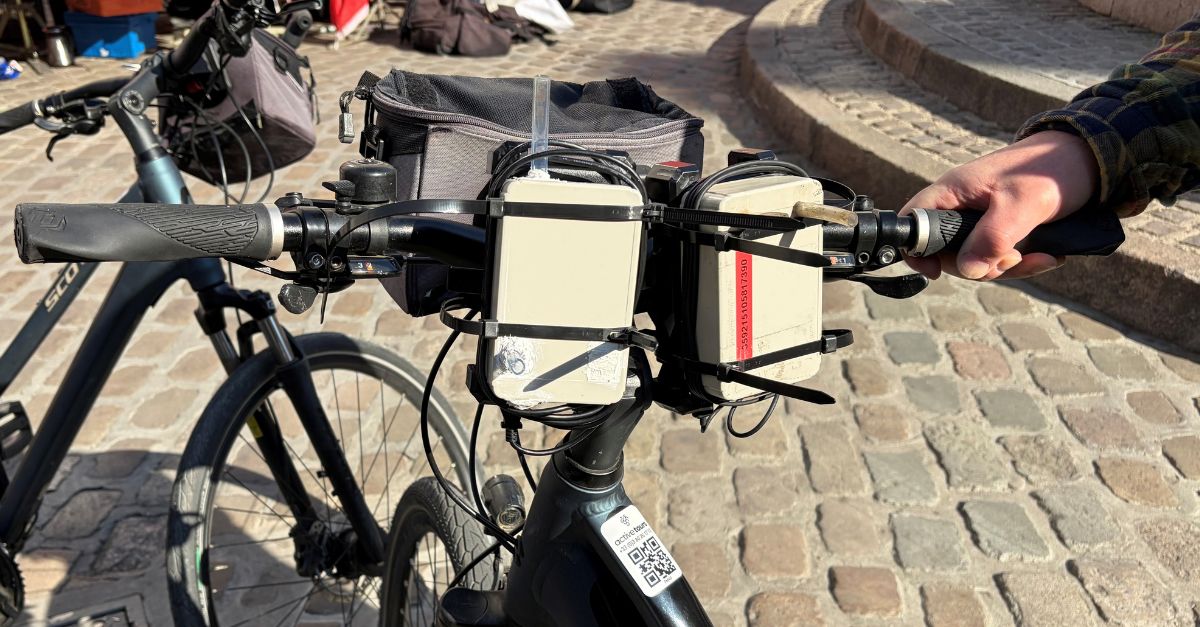
As part of the RESPONSE project, CNet has equipped bikes in Dijon with air quality and sound sensors, enabling citizens to monitor air and noise pollution levels in the places where they live, work and travel.

The Bike-as-a-Sensor solution creates hyper-local air quality and noise maps by collecting and aggregating measurements with a high level of location accuracy, down to individual street junctions. Citizens can view air and noise pollution levels in their neighbourhood, near schools, along shopping streets, on their jogging routes or during their commute, helping them make informed choices based on local conditions.
Features include current and historical pollution levels for fine and coarse particulate matter (PM2.5 and PM10) and nitrogen dioxide (NO₂) at specific locations, calculation of pollution exposure along different routes, and pollution alerts for people with asthma and other respiratory conditions.
Citizens helping to measure the city’s energy transition
RESPONSE is a Smart City project focused on supporting the energy transition and improving the sustainability of cities through the use of intelligent energy systems, infrastructure and governance models. It supports two Lighthouse Cities and six Fellow Cities across Europe in delivering energy-positive and CO₂-neutral solutions.
In the Lighthouse City Dijon, the project is helping to transform an older district into an energy-positive neighbourhood using innovative, smart and sustainable technologies. The air quality and noise monitoring solution forms part of the city’s wider efforts to monitor its transition in terms of air quality, energy and climate, while actively engaging citizens in the process.